
Paper-based check-in still looks familiar. A guest hands over a passport, staff type details into a system, a registration card is printed, signed, filed, and later retrieved when someone needs it. The problem is that this routine creates friction at the exact moment hotels want speed, control, and more structured business software management.
The Real Cost Of Paper-Based Check-In
Manual guest registration invites predictable failures. Data entry errors happen when names, document numbers, or dates are typed under pressure. Delays build up when arrivals come in waves, and a single slow interaction becomes a queue. Paper also creates compliance exposure. If registration cards are misplaced, scanned inconsistently, or stored without clear retention rules, hotels take on risk tied to privacy regulations and audit readiness. Even when staff follow procedures, the process itself is fragile.
How Digital Identity Verification Works In Hotels
Digital identity verification replaces manual steps with a controlled workflow. A document is captured, key data is extracted automatically, and validation checks can run in the background. The guest’s identity record becomes structured and searchable, and the hotel can maintain a consistent process across shifts and properties.
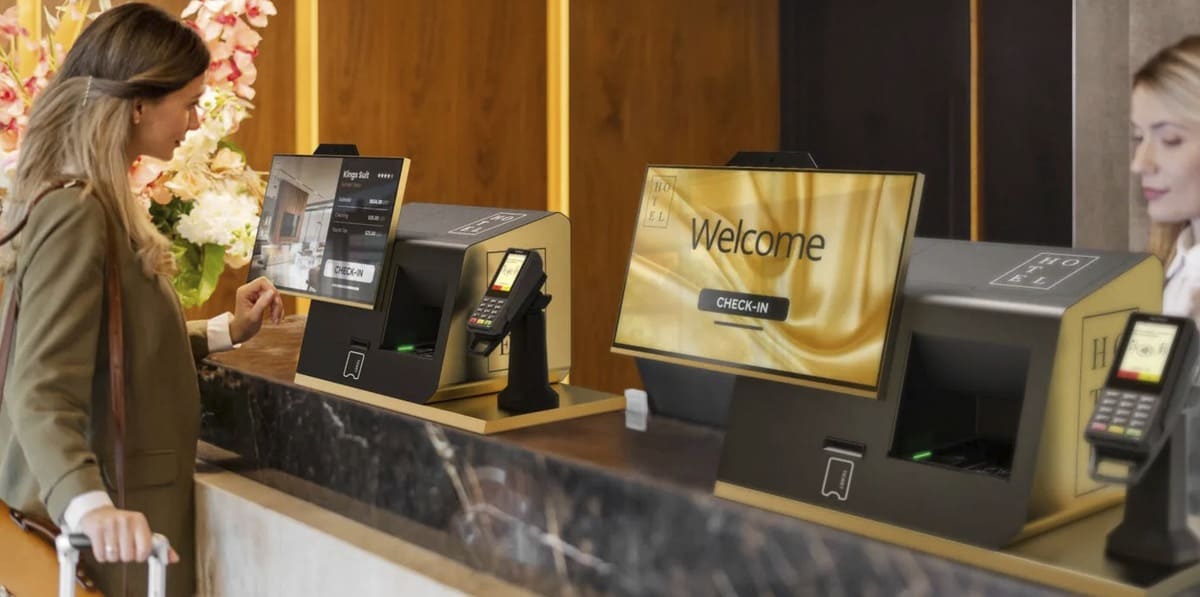
In practice, hotels often use a combination of front desk processing, self-service options, and mobile workflows. Staff can assist guests away from the counter during busy periods, while advance submission of details helps reduce physical interaction at check-in. In higher-traffic properties, self-service kiosks are also used to manage peak hours and support arrivals outside standard desk hours.
The Role Of Passport Scanners and ID Scanners In Guest Registration
The strongest foundation for digital verification is reliable document capture. A passport scanner and ID scanner reduce manual typing and help standardize accuracy. Hotels commonly use ID scanners for passports, national ID cards, and visas, and driving license scanners where local policy permits. In multi-property environments, a hotel ID scanner becomes a consistent tool: the same capture method, the same data fields, the same audit trail, regardless of who is on shift.
This matters because guest registration is not only an operational step; it is a regulated activity in many markets. Automation reduces variance.
Paperless Regcard And Electronic Signatures
Once identity data is captured, the paper registration card becomes unnecessary. A digital RegCard supports a paperless check in hotel process by presenting the registration details on a device and collecting an electronic signature. This reduces printing and storage, but the more important benefit is control: the signed record is time-stamped, tied to the verified identity record, and stored consistently.
Hotels that adopt paperless check in also reduce the back-office burden. No more scanning stacks of cards. No missing signatures. No manual filing that breaks under volume.
Compliance Benefits: GDPR, Data Retention, Audit Trails
Compliance is where digital workflows outperform paper. With electronic capture, hotels can apply retention rules to identity data, restrict access by role, and maintain detailed audit trails that show who accessed or changed a record. Under GDPR and similar frameworks, the ability to manage data responsibly is not optional. Digital identity verification supports this by making security and process enforcement part of daily operations instead of depending on perfect human behavior.
Operational Impact: Shorter Queues, Faster Processing
The operational benefits are measurable even without introducing new staffing. Faster capture and automated extraction shorten the average check-in interaction, which reduces queues and improves the first impression. Properties using mobile hotel check in workflows also reduce congestion by shifting work away from the front desk. Kiosk deployments, when appropriate, add throughput during peak arrival windows and support self check in hotel scenarios without sacrificing control.
These improvements become more visible when digital verification is integrated with hotel PMS systems. In that model, check-in becomes a governed workflow instead of a loose set of tasks.
How Samsotech Supports Paperless, Compliant Check-In Globally
Samsotech provides management software solutions built around identity verification, digital registration, and controlled operations across regions. Hotels can use document scanning, digital RegCard, mobile workflows, and kiosk processing within one platform. The result is practical business software management for real operations: faster check-in, consistent data capture, and compliance-ready records.
For decision-makers, the value is not just speed. It is the ability to run the same standard in different jurisdictions, meet retention and audit requirements, and maintain visibility through reporting that functions as business intelligence software solutions for check-in performance and operational control.