Six minutes does not sound like much. It is shorter than a coffee break and faster than most elevator rides at a busy convention hotel. But multiply six minutes by every arrival, every day, for a year, and it turns into one of the larger controllable labor costs at the front desk.
This article works through the numbers for a typical US hotel: what six minutes of check-in costs per guest, per day and per year, why the average hides the real expense, and which changes actually move the schedule. Every assumption is shown, so you can swap in your own figures.
The headline number: At a 200-room hotel with about 80 arrivals a day, a six-minute check-in uses roughly 2,920 hours of front desk time a year. At a fully loaded labor cost of about $25.70 an hour, that is around $75,000 a year spent on the check-in transaction alone. Cutting desk time to three minutes per guest, and moving some arrivals to self-service, can bring that below $26,000.
Where the six minutes go
Before looking at costs, it helps to see what fills a six-minute manual check-in. The split below is illustrative, based on a traditional desk workflow with a printed registration card and manual ID handling. Time your own desk and replace these figures.
|
Step |
Typical time |
|---|---|
|
Greeting and reservation lookup |
0:45 |
|
Inspecting the ID and typing details into the PMS, or photocopying it |
1:30 |
|
Printing, explaining and signing the paper registration card |
1:00 |
|
Card authorization and incidentals deposit |
1:00 |
|
Room assignment and key encoding |
0:45 |
|
Wi-Fi, breakfast, parking, loyalty and upsell conversation |
1:00 |
|
Total |
6:00 |
Two of these steps are pure data handling: typing ID details and managing a paper card. Together they account for two and a half minutes, which is 40 percent of the transaction. That is the part guests value least and technology handles best.
Step 1: What an hour of front desk time really costs
Hourly pay is only part of the cost. According to the US Bureau of Labor Statistics, pay for hotel, motel and resort desk clerks sits in the mid to high teens per hour nationally, and at or above $20 in high-cost markets such as New York, San Francisco and Honolulu.
On top of wages, employers pay payroll taxes, workers' compensation, health coverage, paid leave and other benefits. BLS compensation data shows wages and salaries make up roughly 70 percent of total compensation for private industry workers. So a simple way to estimate the loaded cost is to divide the base wage by 0.70.
For this model we use a base wage of $18.00 an hour:
- Base wage: $18.00 per hour
- Loaded cost: $18.00 ÷ 0.70 = about $25.70 per hour
- Cost per minute: about $0.43
- Cost of one six-minute check-in: about $2.57 in desk labor
If your market pays more, or your benefits package is richer, your figure will be higher.
Step 2: The daily and annual math for a 200-room hotel
Our example property has 200 rooms, runs at 75 percent occupancy and has an average stay of just under two nights. That produces about 80 arrivals a day.
|
Scenario |
Staff minutes per arrival |
Desk hours per day |
Desk hours per year |
Annual labor cost |
|---|---|---|---|---|
|
A. Manual check-in (baseline) |
6.0 |
8.0 |
2,920 |
$75,044 |
|
B. Digital check-in at the desk (ID scanner plus paperless registration card) |
3.0 |
4.0 |
1,460 |
$37,522 |
|
C. Mix: 60% digital desk check-in, 40% kiosk or mobile |
2.0 (blended) |
2.7 |
973 |
$25,014 |
How scenario C is calculated: 48 guests at the desk at 3 minutes each (144 minutes) plus 32 self-service guests who need an average of 30 seconds of staff help for exceptions (16 minutes). That totals 160 minutes a day.
The baseline of 2,920 hours equals about 1.4 full-time positions spent on nothing but the check-in transaction. Those hours do not include checkouts, phone calls, guest requests or the night audit.
Step 3: Peak hour is where the money really goes
Annual totals are useful, but they can mislead. You do not schedule labor by the minute. You schedule people in shifts, and you staff for the busiest hour, not the average one.
Say 20 of your 80 daily arrivals come between 4 p.m. and 5 p.m. At six minutes each, that hour contains 120 minutes of check-in work. Two agents working flat out could only just keep up, and any cluster of arrivals, such as an airport shuttle or a tour bus, would build a queue that never clears. So you schedule three.
Now cut desk time to three minutes. The same 20 guests need 60 minutes of work, and two agents handle it comfortably.
We ran both situations through a standard queuing model (Erlang C), which assumes guests arrive at random through the hour:
|
Setup |
Agents on duty |
Agent utilization |
Average wait in line |
|---|---|---|---|
|
6-minute check-in |
2 |
100% |
Queue keeps growing |
|
6-minute check-in |
3 |
67% |
About 2.7 minutes |
|
3-minute check-in |
2 |
50% |
About 1.0 minute |
The result surprises many managers. Two agents with a three-minute check-in give guests a shorter wait than three agents with a six-minute check-in. Real arrivals are burstier than the model assumes, so actual waits at peak are usually worse in both cases, but the gap holds.
This is where savings become real. Dropping one agent from a four-hour afternoon peak every day of the year removes 1,460 scheduled hours. At $25.70 an hour, that is about $37,500, which matches scenario B above. The minutes only turn into dollars when they change the schedule.
Step 4: The costs that never appear on the timesheet
Labor hours are the easiest cost to measure. They are not the only one.
- Re-keying errors: A misspelled name or transposed license number creates duplicate guest profiles, breaks loyalty matching and causes billing mix-ups that take far longer to fix than to prevent.
- Paper handling: Printed registration cards have to be filed, stored, retrieved for disputes and eventually destroyed. That is time for the night auditor and space in the back office.
- Chargebacks: A missing or unsigned registration card makes card disputes harder to win. Each lost dispute is a direct revenue loss plus handling time.
- Compliance exposure: Photocopied IDs in a drawer and ID photos on shared drives are exactly the records privacy laws now target. Our guide on how long a hotel should keep a guest ID scan explains why.
- Guest experience: A line at the desk is often the first impression of the stay, and it shows up in reviews long after the room itself is forgotten.
- Turnover and training: Accommodation and food services consistently post some of the highest quit rates in BLS turnover data. Every departure means recruiting and training someone new. A check-in flow that relies on the system rather than memorized steps shortens the time before a new hire can work a busy shift alone.
Step 5: Which changes actually shorten check-in
Not every technology change saves the same time. Here is how the common options compare, based on which steps of the six-minute workflow they remove.
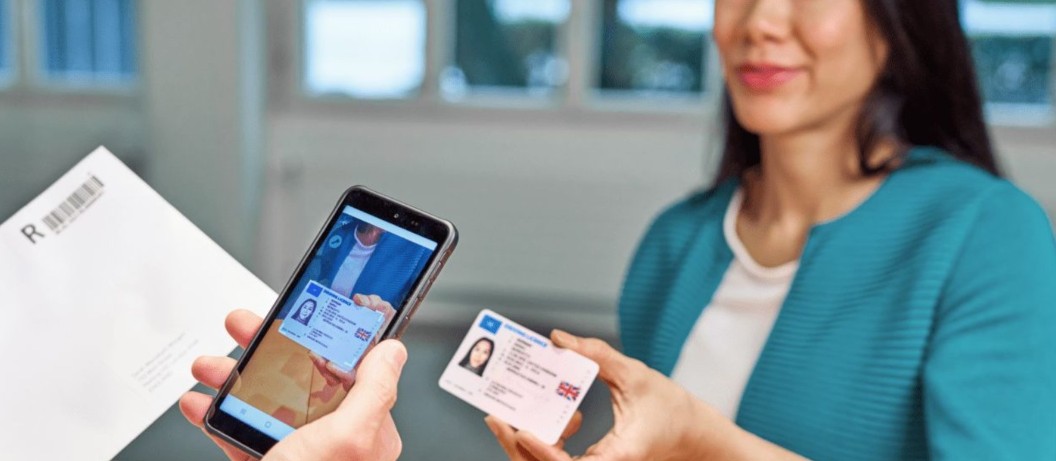
ID scanning at the desk: A passport and ID scanner reads the document and fills the PMS fields in seconds, replacing the 90-second typing or photocopying step. It is usually the fastest win because it needs no change in guest behavior.
Paperless registration cards: Digital registration cards signed on a tablet remove printing, filing and retrieval, and give you a clean, searchable record for disputes.
Online pre-check-in: When guests complete details and upload ID before arrival through contactless check-in, the desk step becomes a quick verification and key handover.
Self-service kiosks: A hotel self check-in kiosk handles ID scanning, payment and key issuance with no agent involved, which matters most for late arrivals and peak hours. If you are buying kiosks, review our ADA buyer's checklist for check-in kiosks first. Accessibility gaps can cost more than the labor you save.
Staff-assisted mobile check-in: iPad check-in lets agents meet VIPs, groups and crowded lobbies away from the desk, which flattens the peak without adding a station.
Most hotels get the best result from a combination. Digital tools at the desk shorten every transaction, and self-service handles the guests who prefer it.
A worksheet you can use with your own numbers
Plug your property's figures into these four formulas:
- Loaded hourly cost = base hourly wage ÷ 0.70 (or use your actual payroll burden)
- Annual check-in hours = arrivals per day × staff minutes per check-in ÷ 60 × 365
- Annual check-in cost = annual check-in hours × loaded hourly cost
- Peak agents needed = peak-hour arrivals × staff minutes per check-in ÷ 60 ÷ 0.70 (target utilization), rounded up
Run the formulas for your current process and for the process you are considering. Pay closest attention to the fourth result. If peak agents needed does not drop, your savings will show up as shorter lines and better service rather than lower payroll. That is still worth having, but you should know which one you are buying.
How to measure your real check-in time
Industry averages are no substitute for your own data. A simple one-week study is enough:
- Pull check-in timestamps from your PMS and compare them with the time guests joined the line, using your lobby camera or a staff tally at peak.
- Time 30 to 50 check-ins across different shifts with a stopwatch and note which steps take longest.
- Separate walk-ins, loyalty members, groups and guests with special requests. Their times differ widely.
- Count how often agents leave the desk to photocopy, find a form or ask a manager.
Most hotels that do this find their true average is longer than they assumed, and that peak-hour times run well above the daily average.
What not to do
- Do not count minutes as savings unless the schedule changes. Faster check-ins that leave staffing untouched improve service, not payroll.
- Do not remove the human option. Many guests, including business travelers at 1 a.m. and families with questions, still want a person. The goal is to free staff for hospitality, not to empty the lobby.
- Do not ignore data rules. Faster ID capture should come with shorter ID retention, not a bigger archive.
How Samsotech helps hotels shorten check-in
Samsotech works with hotels and resorts in more than 150 countries to take the data handling out of check-in. Our ID scanners, paperless registration cards, online check-in, kiosks and iPad check-in connect with Oracle Opera and other leading PMS platforms, so guest details are captured once and flow where they are needed. For more on the shift away from paper, read How Hotels Are Replacing Paper-Based Check-In with Digital Identity Verification.
Want to run these numbers on your own property? Book a demo and our team will walk through your arrival patterns and model the staffing impact with you.
Frequently asked questions
What is the average hotel check-in time in the US?
It varies widely by property type and process. A traditional desk check-in with manual ID entry and a paper registration card commonly takes several minutes, and six minutes is a realistic figure for many full-service hotels at peak. Digital ID capture and paperless registration can bring the staff portion down to two or three minutes. Measure your own desk, because averages hide large differences between shifts and guest types.
How much does front desk labor cost per check-in?
Using a base wage of $18 an hour and a loaded cost of about $25.70, each minute of agent time costs about $0.43. A six-minute check-in costs roughly $2.57 in desk labor, and a three-minute check-in about $1.29.
Do self check-in kiosks reduce hotel staffing costs?
They can, if they reduce the number of agents you need at peak. Kiosks save the most at properties with concentrated arrival peaks, late-night arrivals or limited overnight staffing. If kiosks only shave minutes without changing the schedule, the benefit shows up as shorter waits rather than lower payroll.
What is the fastest way to shorten check-in without buying kiosks?
Start with ID scanning and paperless registration at the desk. Together they remove the typing, photocopying and paper handling that fill about 40 percent of a manual check-in, and they require no change in guest behavior.
How do I calculate how many front desk agents I need at peak?
Multiply your peak-hour arrivals by the staff minutes per check-in, divide by 60, then divide by a target utilization of about 0.70 so agents are not working flat out. Round up. For 20 arrivals at six minutes, that gives three agents. At three minutes, it gives two.